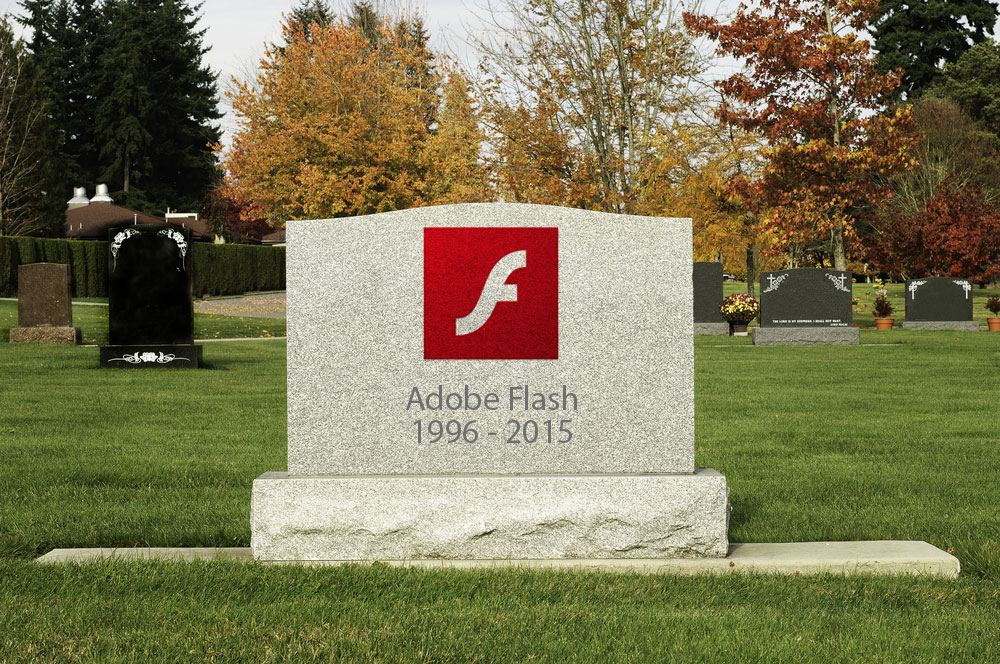
We're as Close to Flash as We've Ever Been
There was a time when the internet felt handmade.
Not in the rough, unfinished way—in the way that you could tell a human being had stayed up until 3am making something because they couldn't stop. You'd land on a site and it would do something unexpected. Something would move. Something would respond to your cursor. Music would start playing that you didn't ask for and somehow you didn't mind. Someone had made a decision—an expressive, unnecessary, wonderful decision—and you were experiencing it.
That was Flash. And if you were a certain age, in a certain part of the internet, in the late nineties and early two-thousands, it was everything.
I was in my late teens. Tutorials came on DVDs. You found things on Napster you weren't supposed to find. There was this whole underground of people building and sharing and teaching each other, not because anyone was paying them, but because the tool had unlocked something and they couldn't keep it to themselves. Flash wasn't software. It was a creative frequency. If you were tuned to it, you felt it immediately—this sense that what you could imagine and what you could actually make had suddenly gotten very close to each other.
That feeling has a name. It's called freedom of expression.
Keith Peters—bit-101—was one of the people broadcasting on that frequency. When he published a tutorial connecting Flash to the Twitter API, it looked like a technical exercise. It wasn't. What he was showing was that Flash had graduated. It wasn't just motion and beauty anymore. It was a genuine interface to complex systems. You could design your own window onto the world's data. You could make it look and feel like anything you wanted.
The tool had become a medium.
I've been thinking about that a lot lately.
Because something is happening right now that feels like that frequency again. Not identical—nothing ever is—but recognizable. The same hum. The same sense that the distance between what you can imagine and what you can actually build has gotten very, very small.
AI-assisted coding did that. Not for everyone—I want to be honest about that, because the fantasy being sold right now is democratization, and I don't think that's quite right. The stack is still complex. The judgment required to build something real hasn't gone anywhere. You still need to understand what you're making and why.
But for a certain kind of person? The ceiling just got obliterated.
The builder-designer hybrid. The person who always had more vision than implementation bandwidth. The one who could see the whole thing—the interface, the logic, the experience—but kept hitting the wall of what was technically within reach on any given day. That person used to have to choose: slow down the vision, or hire around the gap.
That gap is closing.
Flash gave that person a medium that matched how they thought. Immediate. Visual. Expressive. You could feel the feedback in real time—push something, see what happened, push it further. The tool didn't fight you. It wanted to know what you were trying to say.
That's what it feels like to build with AI right now. Not easier, exactly. Different. Like the canvas got bigger and the brushes got smarter and the thing you were reaching for is suddenly just slightly within your fingertips.
We're not democratizing product creation. We're raising the ceiling for the people who were already standing on their toes.
That's not a small thing. That's everything.
I'll give you a concrete example from my own work.
I've spent years developing something I call the Enterprise Designer framework—the idea that the most valuable practitioners in complex organizations aren't specialists, they're integrators. People who can hold the business problem, the user experience, the data model, and the technical architecture in their heads at the same time and make them coherent with each other.
For most of that time, the Enterprise Designer was a concept that outpaced the tools available to realize it. You could think across the whole stack. Actually building across it was another matter. You needed engineers for this, data people for that, designers for the other thing. The vision was yours but the execution was distributed, and something always got lost in translation.
Not anymore.
Right now I'm building things that would have required a team six months ago. A pipeline intelligence tool that pulls from Salesforce data, surfaces the right signals, and presents them in an interface I designed myself—end to end, one person, one coherent point of view. No translation layer. No briefing a developer on what I meant. No waiting.
That's the single pane of glass. Not just as a UI metaphor but as a way of working. One mind, one canvas, the whole system visible and shapeable at once.
This is what Flash promised that generation of creative technologists. Not just prettier websites—a medium that could hold a complete thought. A tool that didn't make you choose between expression and function.
But here's the thing I keep coming back to.
The limit isn't imagination. The limit is simply that we haven't figured out what the extent of this thing actually is yet. And we've all got to experiment to figure it out.
There's no iPhone of our moment yet. That device was the convergence point—the moment when cloud, the web, mobile, and touch all came together and suddenly everyone understood what was possible. Before that, you had all the pieces scattered across different tools and platforms. People were building beautiful things, but the shape of the future wasn't visible yet.
We're in that scatter phase again.
There's a convergence waiting to happen here. Some combination of capabilities and culture and tools that we haven't quite assembled yet. Some way of working that will feel as obvious in retrospect as the smartphone feels now. But we can't see it from the inside. We can only play. Experiment. Keep pushing the canvas in different directions until something clicks and suddenly everyone feels it at once.
That's what the Flash community was really doing. Not just making pretty websites. They were playing with a new medium until its true shape emerged. Some of them became the web designers of the 2010s. Some of them became creative coders. Some of them just loved the feeling of being part of something that was being invented in real time.
We're in that invention phase again. The tools are good enough. The practitioners are tuned to the frequency. The canvas is there.
We just have to keep playing until we find what we're actually looking for.